
Global Win Co LLC is one of the largest food Trading companies in the US, and continues to grow based on what it values most: our partners MBRF, the power of innovation that drives us every day, and a belief in simple things, simplifying, always doing better, and trusting in people’s work.
Food Safety and Quality are at the heart of our business. We continually review every aspect of our daily operations to make sure we provide safe, high-quality, nutritious products for our customers and consumers.
Each Business Unit has a specialized team dedicated to Food Safety and Quality Assurance (FSQA). This team is responsible for implementing local policies and guidelines in four key areas: Food Safety, Food Quality, Food Fraud, and Food Defense. The area leaders oversee all Food Safety and Quality Assurance Programs within each Unit and collaborate closely with the Global Department.
Within our processing operations, we implement comprehensive food safety and quality programs. These include Good Manufacturing Practices (GMP), Standard Operating Procedures (SOPs), Sanitation Standard Operating Procedures (SSOPs), Hazard Analysis and Critical Control Points (HACCP) procedures, and validated technology interventions designed to eliminate or reduce biological, chemical, and physical hazards from raw material production by each country’s regulations.
Each of these processes is monitored by our team members trained in food safety and quality assurance, as well as government officials, in each production facility. Additionally, inspection and process verification by government officials occur before the mark of inspection can be placed on products entering commerce.
Based on the strategic pillars of Excellence, Transparency, Integrity, Innovation, Ownership, and Collaboration, our FSQA teams strive for excellence by partnering with customers, regulators, and institutions to deliver a product of the highest quality and safety.
We have different certifications recognized by the Global Food Safety Initiative (GFSI), the main global initiative for the development of food safety management systems to ensure food facilities are processing safe food for consumers. Examples of GFSI-compliant food safety schemes implemented at Global Win Co LLC include BRCGS, SQF, FSSC 22000, and IFS. These certifications provide access to a broader market, enabling us to serve international clients across each Business Unit.
Certifications
Additionally, each Business Unit has programs to further enhance the quality of its production chain. The protocols go beyond the regulations in force, including procedures on animal welfare, traceability, sustainability, operation, production, quality, processing, and marketing, as well as the strictest global certifications.
Animal Welfare
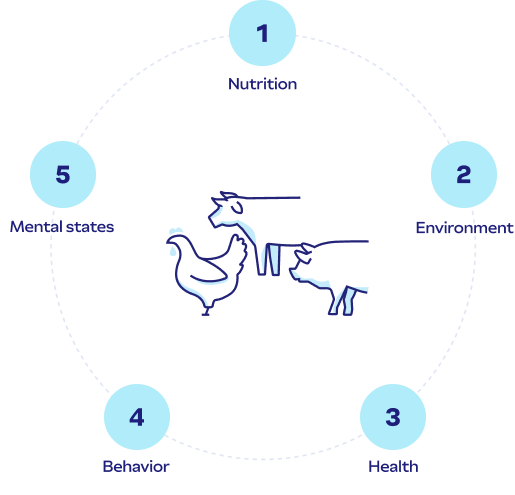
As leaders in animal protein production, we have a serious responsibility to provide our animals with a good quality of life and a humane end. Across our operations, we have embedded animal welfare practices that demonstrate our respect for the animals on which our business depends. We have aligned our policies, including the BRF Global Animal Welfare Policy, and procedures with local laws and regulations, as well as internationally recognized standards, including the Five Domains Model, which is a framework for assessing animal welfare.
The Five Domains Model is a science-based welfare assessment framework that aids in the evaluation of animal welfare risks and opportunities for welfare improvement. We have adopted the Five Domains model over the Five Freedoms model because it considers an animal’s mental state and potential for positive experiences, placing more emphasis on an animal’s overall wellbeing and ability to thrive, not just the absence of suffering.
Traceability
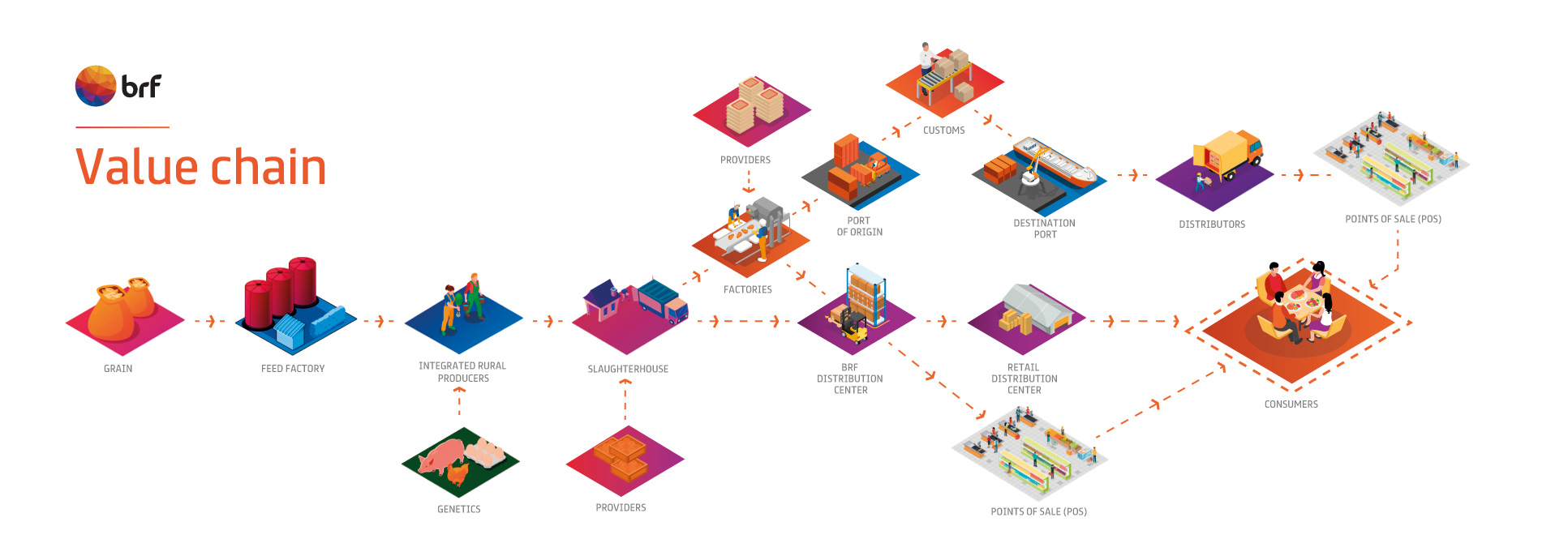
From packaging to animal protein, passing through the stages of transportation and distribution to the consumer market. The life cycle of our products has economic, social, and environmental roles continuously managed.
At the production stage, compliance with hygiene and safety standards, as well as the recording of information on raw materials, raw materials and packaging, among other things, are crucial to ensure quality in the marketing of products. To this information we add the records obtained in the control of all our processes and also the information necessary to maintain the quality standard along the chain, such as the temperature of cooking, cooling, storage and transport of the products.
All this must be accompanied by our traceability process, in order to guarantee the safety of the procedure and contribute, above all, to the approval of customers, consumers and regulators.
SCREENING TECHNOLOGIES
Traceability represents the capacity that we have to connect all the relevant information recorded throughout the history of production and distribution of the products or of a lot sent to the consumer market. That is, it is extremely important to connect information from the following points:
What
Identify which product is being tracked.
Where it came from
Identify the source of the product being tracked.
Where did you go
Know all the destinations that this product will have.
For this monitoring to be effective, it depends on the synergy of different technologies, such as the
Intelligent Storage Systems (Warehouse Management System – WMS), the Temperature Sensors, and the search for integration with advanced information tracking systems, such as , the technology of Blockchain.
Implementing a product verification and validation process, which is agile and that provides information to improve the production chain, helps the company not only to meet the legal requirements, but also to differentiate itself from the competition.